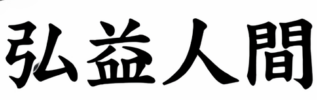
弘益人間 — Hongik Ingan: To Benefit All Mankind
I was not looking for a philosophy when I first came across Hongik Ingan. I was looking at a world that seemed to be coming apart in several directions at once — the war in Ukraine entering its fourth year, conflicts in the Middle East, serious discussions in Germany about reintroducing mandatory military service, and a general coarsening of public life that was hard to name but easy to feel. And in that context, coming across an idea that, according to tradition, was formulated over three thousand years ago and had somehow remained coherent and useful — that was worth paying attention to.
So: what is Hongik Ingan, and where does it actually come from?
The Origin
홍익인간 is one of the oldest recorded ideas in Korean civilization. It appears in the Samguk Yusa (삼국유사), a 13th-century text that collected Korea’s earliest myths and histories, in the founding legend of Dangun — the legendary ancestor of the Korean people and founder of Gojoseon, the first Korean kingdom, traditionally dated to 2333 BCE.
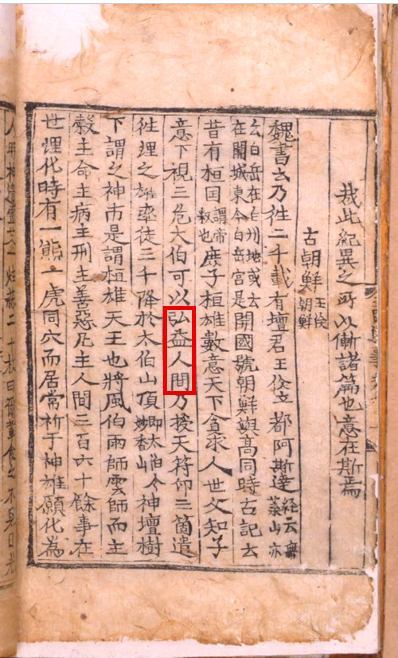
The story, briefly, is this: Hwanin (환인), the Heavenly Lord, sees that his son Hwanung (환웅) wishes to descend from heaven and live among humans. He selects the sacred peak of Taebaek-san for the descent, gives Hwanung three heavenly seals and three thousand followers, and sends him with a mission — not a military or political one, but a moral one: to govern the human world according to the principle of 홍익인간, broadly benefiting all humankind. This is the earliest recorded appearance of the phrase, and the context matters: it is not a law or a slogan, but the foundational reason given for why a civilization should exist at all.
The three characters carry distinct meanings that combine into something larger than their sum:
홍 (弘)
to expand, to make great
익 (益)
to benefit, to help
인간 (人間)
humanity
Together they describe an outward orientation: not self-cultivation as an end in itself, but self-cultivation in order to be useful to others and to the world. It is worth noting how ancient this is relative to the other traditions it is sometimes compared to — it predates the formal arrival of Confucianism in Korea, predates the spread of Buddhism on the peninsula, and predates every political system that has since invoked it. Scholars have drawn parallels to arete in ancient Greek ethics, to ren (仁) — benevolence — in Confucian thought, and to ubuntu in African philosophy, because all of these are trying to express the same underlying idea: that a person is not fully realized until they are living for something beyond themselves.
A note on the name itself. For a Western ear, Hongik Ingan is unfamiliar, a little unwieldy, and not immediately transparent. I am aware of this. But I think a name should reflect what something actually is, not what it would be easier to call it — and there is no shorter or more convenient phrase that carries the same meaning. If anything, the slight friction of encountering an unfamiliar word is appropriate here: it signals that something is being offered that did not originate in the culture you already know, and that it may be worth a moment of curiosity before it becomes familiar.
The Philosophical Core
Hongik Ingan rests on three ideas that are simple to state and demanding to practice.
The first is universal benevolence — the conviction that strength, knowledge, and capability exist to serve others, not to dominate them.
The second is moral responsibility — the understanding that cultivating oneself is not a private achievement but a preparation for contribution to society.
The third is a human-centered worldview in which human dignity and human flourishing are the highest organizing values of a civilization.
What makes this interesting as a philosophical framework is not its age, but its orientation. It does not ask what you can achieve, or what you are owed, or how you can protect what is yours. It asks what you are doing with whatever you have been given — ability, knowledge, strength, time — and whether it is being directed outward.
Why This Idea Matters in the Present
I encountered Hongik Ingan at a moment when questions about what actually holds communities together were not abstract. In 2022, working alongside volunteers to support Ukrainian refugees, I watched ordinary people — without mandate, without infrastructure at the start — accomplish something that no top-down coordination had managed. What drove it was a straightforward decision by many individuals to be useful to other people. The principle scaled. That experience left a lasting impression on me: that Hongik Ingan is not a historical artifact, but a description of something that still works and is still needed.
Being a physician, I think about this in concrete terms — what people need, what kinds of engagement sustain health and identity and a sense of purpose across a lifetime.
That thought leads to the same idea: Hongik Ingan is not finished. By tradition it is 3,000 years old, and it is still asking the same question.
What are you doing with your strength?
I am still working out my answer. This project is part of that.